
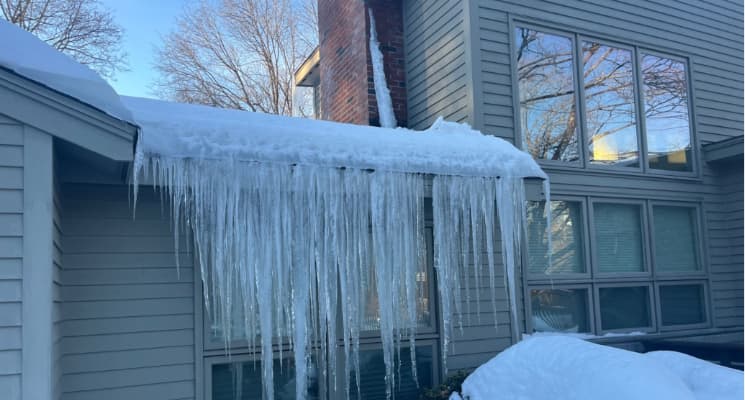
Prevent Costly Ice Dam Damage to your Homes
Ice Dam Damage & Your Paint Job: How Winter Roof Leaks Damage Ceilings, Walls, And Exterior Surfaces In Massachusetts
In this blog, we’ll break down everything you need to know about ice dams. You’ll learn how and where they form, as well as how to identify the signs of damage they can inflict on your home. With this knowledge, Massachusetts homeowners can implement preventative measures and confidently address any damage that occurs.
- What Are Ice Dams?
- How Do Ice Dams Form?
- Why are Ice Dams Common with Older Massachusetts Homes?
- Recognizing The Warning Signs Of Ice Dams On Your Roof.
- Interior Damages From Ice Dam Leaks in Your Home.
- What Exterior Damages Do Ice Dams Cause?
- What Do I Do If I Have An Ice Dam?
- When to Contact HDF Painting
- How To Prevent Ice Dam Damage: Tips For Massachusetts Homeowners
What Are Ice Dams?
Imagine a beaver dam, but on your roof. That’s essentially what an ice dam is: a ridge of ice that forms at the roof’s edge. This barrier stops melting snow from draining away, causing water to pool and potentially seep under shingles, resulting in leaks and damage to your home.
How Do Ice Dams Form?
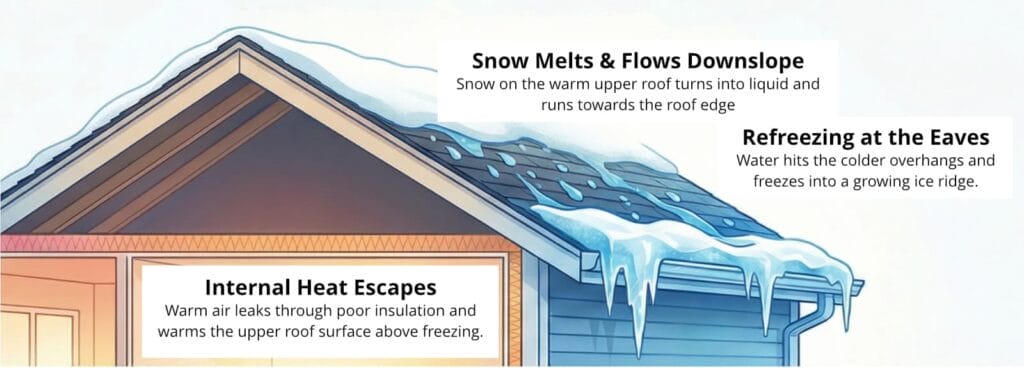
During winter, heat from the living space below can escape through the attic and warm the upper layers of the roof. This warmth causes snow on the roof to melt. As this meltwater trickles down towards the colder eaves of the roof, it refreezes. Over time, this repeated cycle of melting and refreezing builds up a ridge of ice along the roof edge known as an ice dam.
Why are Ice Dams Common with Older Massachusetts Homes?
For many Massachusetts homeowners, ice dams are a recurring and costly problem. If not dealt with promptly, they can lead to a cascade of issues, including water leaks, structural damage, mold growth, and compromised insulation.
As HDF Painting is located in Historic Concord, Massachusetts, we often work on beautiful Victorian and Colonial homes. These classic designs, while charming, can be more vulnerable to ice dams due to specific construction characteristics.
Colonial homes often feature steeper roof pitches and, historically, less attic insulation than modern homes. This allows heat from your living space to escape into the attic, warming your roof.
Victorian homes, with their complex and beautiful rooflines, can also suffer from similar insulation problems. Their intricate designs, featuring multiple dormers, valleys, and numerous nooks and crannies, create more opportunities for heat loss and for snowmelt to pool.
In many older Massachusetts homes, the real risk comes from a combination of leaky ceilings, thin or patchy attic insulation, and sometimes limited roof ventilation, rather than age alone. When these factors line up, the roof warms unevenly, snow melts faster, and ice dams form more easily.
Recognizing The Warning Signs Of Ice Dams On Your Roof.
At HDF Painting, we believe in proactive care for your home. That’s why we recommend a yearly structural inspection. Think of it as a quick check-up for your house! Catching small issues early can prevent them from becoming costly repairs down the road.
Common warning signs include:
- Large icicles hanging from your roof’s edge. On their own, they don’t always mean you have an ice dam, but when you also see water stains on ceilings or peeling paint and wallpaper near upper walls, they become a strong red flag.
- Ice pushing through soffits.
- Water stains or active leaks on your ceilings and walls, especially after snowstorms or thaws.
- Keep an eye out for large build-ups of snow and ice on your roof, as this can contribute to ice dam formation.
- Moisture, mold, or frost building up on the underside of the roof and inside the attic.
Interior Damages From Ice Dam Leaks in Your Home.

When ice dams form on your roof, they can lead to significant interior damage. The most common issues include:
- Water Leaks: As ice dams prevent snowmelt from properly draining off the roof, water can seep into your home through gaps in the roof shingles.
- Ceiling Stains and Peeling Paint: Water that infiltrates your home can cause brown or yellow stains on ceilings and walls. It may also result in paint peeling or bubbling.
- Mold and Mildew Growth: Excess moisture from water leaks creates ideal conditions for mold and mildew to grow on drywall, framing, and insulation, which can affect both your home and indoor air quality.
- Paint Bubbling & Peeling: Moisture trapped behind paint causes bubbling, blistering, and peeling. Typical problem areas include around ceiling lights, skylights, exterior walls, and vaulted ceilings.
What Exterior Damages Do Ice Dams Cause?
Ice dams can also cause serious damage to the outside of your home if they’re not dealt with quickly. Common exterior issues include:
- Roof Shingles Failure: As melting snow backs up behind the dam, it seeps under shingles and can damage the roof and cause leaks.
- Gutter Damage: Ice dams can also put a strain on gutters as they form along the edge of your roof. The weight of the ice and snow buildup can lead to sagging or even breakage.
- Siding & Trim Damage: Water running down can soak siding, trim, and sheathing, leading to paint failure, swelling, and, in some cases, mold or structural deterioration.
- Moisture in Exterior Substrates & Wood Rot: When wood or fiber-cement siding and exterior trim stay wet repeatedly, it can dramatically shorten the life of an otherwise sound paint job and lead to rot, soft spots, and recurring paint failure in the same areas.
What Do I Do If I Have An Ice Dam?
If you suspect ice dam damage, early inspection often prevents larger finish failures later. Addressing moisture damage quickly helps protect framing, insulation, and finish surfaces.
The first person you should contact is a qualified roofing contractor experienced in ice dam removal. They can safely remove snow from the roof, assess the roof system, and address any active leak points.
Once the immediate crisis is handled, it’s wise to bring in an insulation or energy specialist to evaluate air leaks, insulation levels, and attic ventilation so you’re not fighting the same issue every winter.
When to Contact HDF Painting
Our company, HDF Painting, is typically brought in after a roofing team confirms that any leak source has been resolved. Our role is to restore interior and exterior finishes correctly the first time, preventing repeat failures and ensuring long-term durability.
Repairing Interior Ice Dam Damage
When ice dams damage your home’s interior, we follow a clear, step-by-step restoration process. We begin with a thorough inspection to assess moisture and damage, followed by drying and removal of compromised drywall.
Next, we treat any stains or minor mold growth. Finally, our team expertly patches, primes, and paints, utilizing precise color matching to seamlessly blend repairs and restore your space to its original condition.
Repairing Exterior Ice Dam Damage
We begin by thoroughly preparing surfaces, scraping away loose paint, and repairing or replacing any damaged wood, trim, or fascia. Then, we prime water-affected areas with stain- and tannin-locking primers, ensuring all vulnerable spots are sealed.
Finally, we apply durable, flexible exterior paint specifically chosen to withstand New England’s harsh winter conditions, guaranteeing a long-lasting and weather-resistant finish. Our recommended paint brand is C2 Paint from The Coatings Alliance.
How To Prevent Ice Dam Damage: Tips For Massachusetts Homeowners
Our recommended steps include:
- Keep Roof Snow Loads Managed: Use a roof rake to remove at least the lower 3 feet of snow after major storms. Always hire a professional.
- Gutter Maintenance: Keeping gutters clear to allow meltwater to drain down spouts.
- Improve Attic Insulation: Consistent insulation helps maintain uniform roof temperatures &and correct the heat loss problem.
- Seal Air Leakage Path: Stopping warm air from entering the attic is one of the most effective prevention strategies.


